
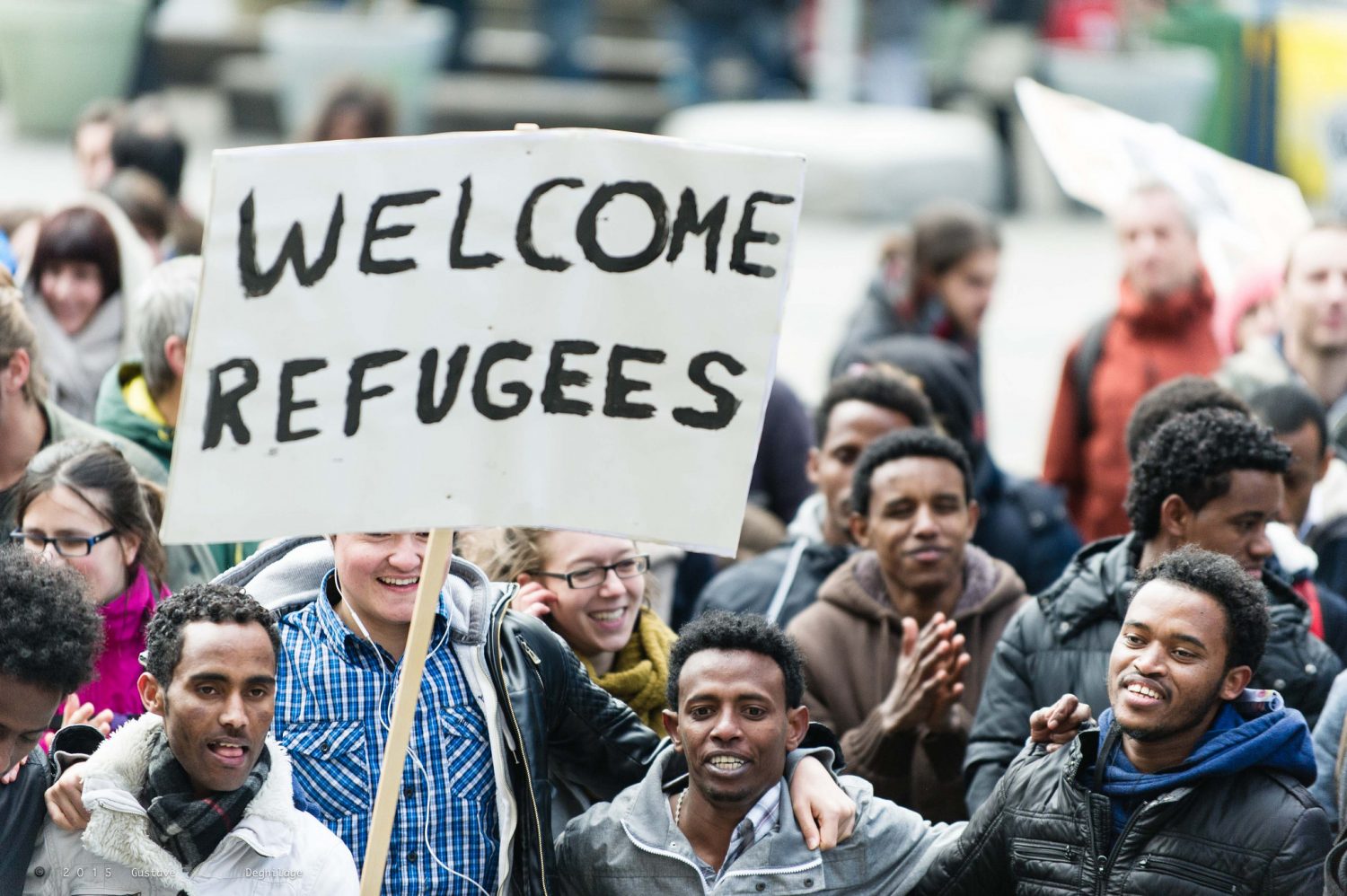
 Samina is a memorable person, not because she’s a refugee but because she is remarkable. The first time I met her was during our Zoom appointment for citizenship class registration that InStepp offers online. She proudly told me that she had learned to drive and speak English because she wasn’t afraid. It really impressed me; that’s not the attitude most people have, and I think Samina knows that. She isn’t afraid of learning new things because she has had to do scarier things.
She left Pakistan in 2012 and went to Bangkok, Thailand for 2 years and 10 months to apply for refugee status. She told me her life was difficult in Thailand. In fact, she gave birth to her baby in prison where she stayed 1 year and 6 months while waiting for someone from UNCHR (United Nations High Commission for Refugees) to come get her. The Thai police arrested 53 people in her building on the same day as her because they didn’t have visas. They didn’t recognize that these people had applied for refugee status and were awaiting the approval of their applications. Samina says she was with 370 people in 1 room and didn’t know when morning or night was. She doesn’t dwell on this, however, and says of her life in Durham, N.C., “Thanks God my life is good when arrived to U.S.” At the end of our interview, she introduced me to her “prison baby” who is now a beautiful six-year old boy with huge, dark eyes. They both had big smiles on their faces.
In 2013, Ola left her home country of Syria and everyone she knew and joined her 6.6 million compatriots who are living in refugee camps or relocated around the world. According to amnesty.org, 25% of the total global refugee population is from Syria as a result of its 10-year crisis. Most go to Lebanon, Jordan, Iraq or Egypt. Ola and her husband lived in Egypt for almost 4 years, February 2013 –December 2016 to be exact. The refugees I have met can tell me the exact dates and places they have been, perhaps it’s from the long process of applying for refugee status and the many interviews. Ola says life in Egypt was hard because she had no friends and didn’t know where they would be sent. After five years, she now speaks English well and says that it has been pretty easy to learn. She is friendly and smart and told me, “I miss my home country,” but she is “grateful for freedom.” Ola was quick to point out that something that has helped her is her positive attitude. She and her husband came with a lot of hope and love for this country and its people. She recognizes that even though it was lonely in the beginning she believes, “If you have an open mind, you’ll always think this. I learned a lot of things. I changed my life. I feel this my country-really.”
Neither Ola nor Samina chose the United States; they were assigned. And they are grateful. Both ladies have completed 5 years of legal permanent residency in the U.S. and are now enrolled in InStepp’s free online citizenship classes. They are both studying for their citizenship interviews and are preparing to apply for naturalization, which InStepp will also help them with. Samina has a notebook of all the words she has learned to read and write and beams when she says that she is looking forward to voting and being “free”. She says her son can go to the army, police or be a doctor. That for her is “freedom”.
CWS-Church World Services and World Relief (WR) are organizations that helped Ola and Samina settle into their lives in North Carolina. I spoke to Jeremy Walters from World Relief who has referred many refugees to InStepp about the refugee experience and his organization.
AT: How do most refugees come to the U.S?
JW: All refugees come to the U.S. through a program overseen by the United Nations called the UN High Commissioner for Refugees. The UN defines a refugee as “someone who has been forced to flee his or her country because of persecution, war or violence. A refugee has a well-founded fear of persecution for reasons of race, religion, nationality, political opinion or membership in a particular social group.” After they have fled their own country, some of these people live in refugee camps or some live on their own in a city while they apply to be a refugee and their legal case is processed. After the long wait for approval to officially be a refugee, the person or family will be assigned to one of the countries that have an established refugee resettlement program, like the U.S. does. They will then be assigned to one of the refugee resettlement agencies, like World Relief.
AT: What services does World Relief provide?
JW: World Relief’s services are vast and are available for up to 5 years after the individual or family arrives in the United States. Services begin even before the refugee arrives through securing housing and ensuring that it is well-furnished with a culturally appropriate meal waiting when they get there. We also assist with enrolling the client in public benefits, establishing medical care, enrolling children in school, registering the clients for ESL classes, connecting the clients with volunteers to introduce them to the community, and assisting them with finding employment, all within their first 90 days of arrival. Our other programs provide services throughout the rest of their first 5 years including Driver’s Education classes, more extensive ESL training, support for better employment, youth programs, group workshops on various topics, and case management for long-lasting vulnerabilities such as disabilities. World Relief’s goal in all of these services is to welcome the client as our new neighbor and to empower them toward self-sufficiency in their new life here.
AT: Why did you choose to work with the refugee populations?
JW: My choosing to work with this particular group of people stems from a desire to help vulnerable and underserved people feel loved, seen, and empowered. Our clients are wonderful people who have been marginalized in one way or another and I want to make sure they know that they are welcomed and supported here. I also understand that my own experience is so narrow, and I feel that people from other walks of life have so much to share and contribute.
AT: What do you want people to know about refugees and their experiences?
JW: Refugees are people just like you and I, who through no fault of their own, have seen and experienced terrible things and been forced from the place they once called home. They are kind, gracious, and deserving of a warm welcome here in “the land of opportunity”. Studies even show that though they initially receive some financial assistance upon arrival, refugees positively contribute to the economy, the creation of culture, and the revitalization of depressed areas, even generating and returning billions of dollars each year back to their new communities. Refugees bring even more life to our beautiful country and demonstrate the principle that helping and supporting others creates a better world for us all.