
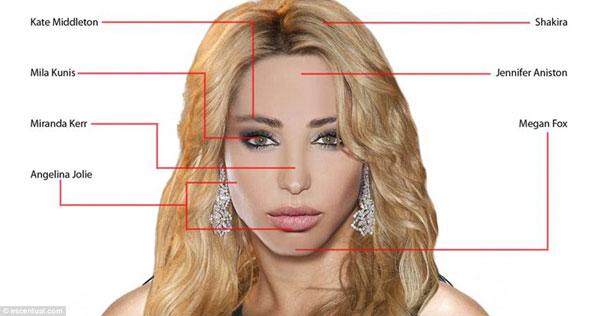
Slim thighs, toned arms, flawless complexion, and a smile to top it all off. Everyday, thousands of images flash before our eyes of women with perfect bodies, carefully crafted behind a computer screen. Seeing these images has become so commonplace that we often accept them as normal representations of what women could, and should, look like.
And it is hard not to see these images as anything less than normal- for decades, the media has been flooded with photo-shopped images of celebrities and models depicting a beauty ideal that is far from realistic. However, they are doing serious damage to the ways that women view themselves and others.
The body types reinforced by mainstream media promote an image of perfection that is simply unattainable. By editing images of women and passing them off as natural, people are led to believe that the bodies they see in magazines are real. One study revealed that as many as fifteen percent of 18 to 24 year olds surveyed were convinced that images of celebrities and models were authentic representations of their actual bodies [1]. Women are misled to believe that the bodies they see are possible and desirable.
Consequently, photo-shop editing leads many women to be unsatisfied with their own self image. As evident by the fact that seventy eight percent of 17-year-old girls are unhappy with their bodies, body image can greatly influence one’s sense of self [2]. Additionally, millions of women each year deal with eating disorders which can seriously impact one’s health and daily life [1]. And although the media is not the only factor involved, it certainly plays a large role in shaping young women’s satisfaction with their own appearance.
On a more optimistic note, many companies are making important strides to challenge the use of Photoshop. On October 1, Getty Images, the top global photo agency, adopted a policy that it would no longer accept images that had heavily altered women’s bodies to look thinner or larger [3]. Other companies like Dove and Aerie have started campaigns to celebrate natural beauty and all body shapes and sizes [4]. Their actions are incredibly important for promoting changes that will allow society to see beyond artificial images and define beauty for themselves.
Creating healthier images of women’s bodies goes beyond ending the use of Photoshop. It involves changing the cultural and social norms that reinforce these narrow ideals of what beauty is and what it looks like. But for now, it is important to recognize the role that photo editing plays in our perceptions of women’s beauty and in our everyday lives. So, that’s why Photoshop still matters.
[1] Vagianos, Alanna. “Survey Proves We Still Really Need To Talk About Photoshop.” The Huffington Post, TheHuffingtonPost.com, 27 Nov. 2013, www.huffingtonpost.com/2013/11/27/photoshop-survey-women_n_4350263.html. [2] Teen Health and the Media, depts.washington.edu/thmedia/view.cgi?section=bodyimage&page=fastfacts. [3] Smith, Lydia. “Top Global Photo Agency Bans Photoshopped Images of Women from Its Libraries.” The Independent, Independent Digital News and Media, 30 Sept. 2017, www.independent.co.uk/news/world/getty-images-photo-agency-bans-photoshopped-women-body-stock-images-a7975381.html. [4] Smith, Lydia. “Top Global Photo Agency Bans Photoshopped Images of Women from Its Libraries.” The Independent, Independent Digital News and Media, 30 Sept. 2017, www.independent.co.uk/news/world/getty-images-photo-agency-bans-photoshopped-women-body-stock-images-a7975381.html.