
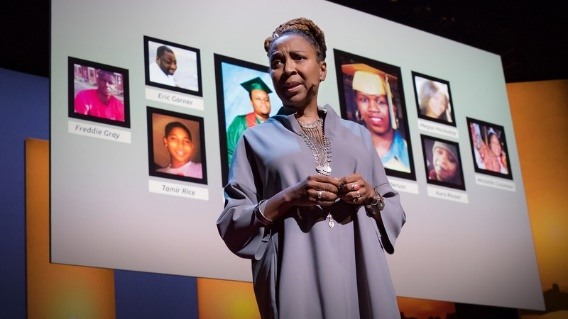
When understanding feminism, it is essential to look at all the layers of a woman and how they impact the woman’s ability to live a full life. For many decades the focus has particularly been on discrimination in the realm of gender only. Professor Kimberlé Crenshaw, Executive Director of the African American Policy Forum and a professor of law at Columbia University and the University of California, Los Angeles, noticed a gap in the discussion of what it means to be a woman along with race/sexuality/religion and other identities, which resulted in her development of the concept of intersectionality.
Crenshaw developed the concept of intersectionality to “highlight the multiple avenues through which racial and gender oppression were experienced so that the problems would be easier to discuss and understand.”[1] Originally used for speaking in terms of race and gender that impacted the lives of African American women, intersectionality has gone on to expand to other aspects of the identity of a woman. Crenshaw recalls this during her piece in the Washington Post:
“Originally articulated on behalf of black women, the term brought to light the invisibility of many constituents within groups that claim them as members, but often fail to represent them. Intersectional erasures are not exclusive to black women. People of color within LGBTQ movements; girls of color in the fight against the school-to-prison pipeline; women within immigration movements; trans women within feminist movements; and people with disabilities fighting police abuse — all face vulnerabilities that reflect the intersections of racism, sexism, class oppression, transphobia, able-ism and more.”[2]
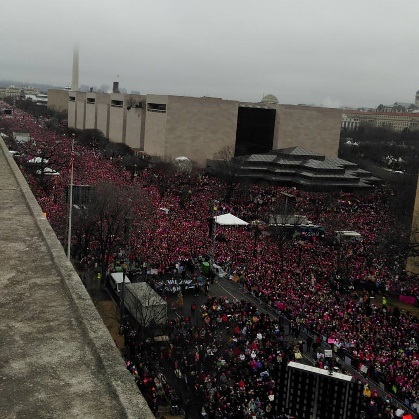
By acknowledging these identities that adds to her experience of living her life as woman, Crenshaw opened a new framework in which people advocated for issues. No longer can one speak about equality without addressing the experiences women went through in light of their multiple identities. And we saw this displayed in the discussion of the development and the execution of the historic Women’s March in January of this year.
As Crenshaw emphasizes, “We simply do not have the luxury of building social movements that are not intersectional, nor can we believe we are doing intersectional work just by saying words.”[3]
Crenshaw, in September 2016, delivered a TEDTalk on intersectionality and the gun violence against African American women. Click here to view.
[1] Kimberlé Crenshaw, “Why Intersectionality Can’t Wait,” Washington Post, September 24, 2015, https://www.washingtonpost.com/news/in-theory/wp/2015/09/24/why-intersectionality-cant-wait/?utm_term=.3b5dd470df7a.
[2] Ibid.
[3] Ibid.