
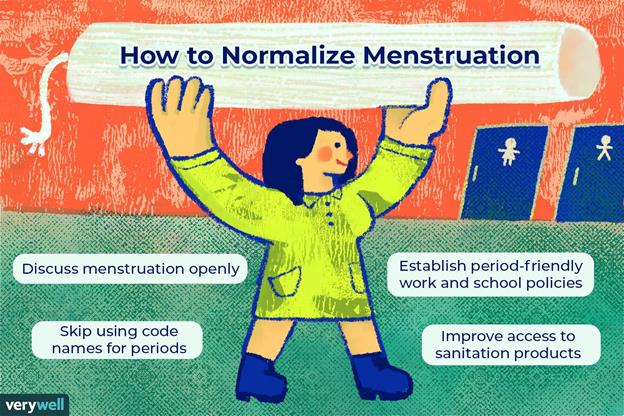
The past few days, I’ve been immersing myself in the research of menstrual health education in South Asia as part of my volunteer work at Dweebs Global, a non-profit global organization that aims to help issues around the world. During this period, I came to realize some patterns that repeated themselves with the topic of menstruation: there were a lot of harmful misconceptions and stigma surrounding it. Growing up in the Philippines, I can’t help but notice the parallels between our culture and the South Asian culture toward menstruation. If some people say your period is supposed to be power, why were women around the world shamed for it? Why do some of us have to live in constant discomfort because of the stigma that surrounds it?
Impure and evil: these were some things associated with menstruation in South Asian countries such as Bangladesh and India. In Hinduism, a commonly practiced religion in South Asia, bodily secretions and the people who discharge them are believed to be polluters. Because of this, some of the menstrual practices of South Asian countries cater to this belief. In Nepal, though not commonly practiced anymore, a menstrual practice they had was chhaupadi which was characterized by the exclusion and banishment of menstruating girls and keeping them in dark sheds or “menstrual huts” until their period ended. This stemmed from the belief that menstruating girls were impure and brought bad luck.
In the Philippines, though I did not experience any of these things, menstruation is still a social taboo. Something that some Filipinos, elders especially, believed had to be hidden and not talked about. An experience I could vaguely remember after getting my period was that I was not allowed to play outside anymore and had to act “womanly” now. In a 2012 study, girls from certain schools in the Philippines reported feelings of confusion, shame, and embarrassment because they were either unknowledgeable of their period and how to manage it, were teased for it, or both. I would say that the situation has improved since then, but the mere fact that it is still a silenced topic for some groups shows that it still can be harmful to menstruators.
The misconceptions and lack of awareness that surround menstruation can affect many aspects of the lives of women. Studies have shown that it can affect their education and their state of living. It is undoubtedly an issue faced by women in other parts of the world other than the Philippines and South Asia. Ending the stigma and raising awareness on menstruation does not only help women lead healthier and better lives; it can also positively affect and educate future generations regardless of gender. With that said, here are some great sources to help you learn more about the issues and myths that surround menstruation: